Our Portfolio

Innovative Measurement Solutions

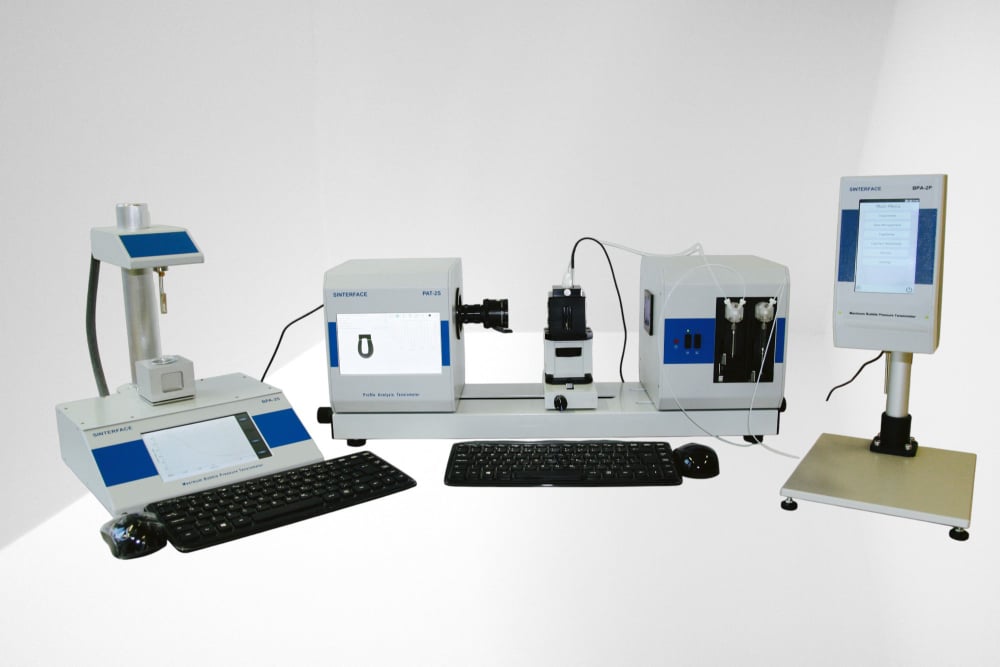
SINTERFACE specializes in high-precision solutions for characterizing liquid interfaces, foams, and emulsions. Our portfolio ranges from dynamic tensiometry (BPA-Series, PAT-Series) to interfacial rheology, contact angle, foam and thin film analysis and unique micromanipulation systems (DBMM) for leading laboratories worldwide. 

View Categories Technical Support
Sinterface Products

Product Categories

Our main expertise is the development of measuring instruments for the characterization of interfaces.

Tensiometry

Tensiometry

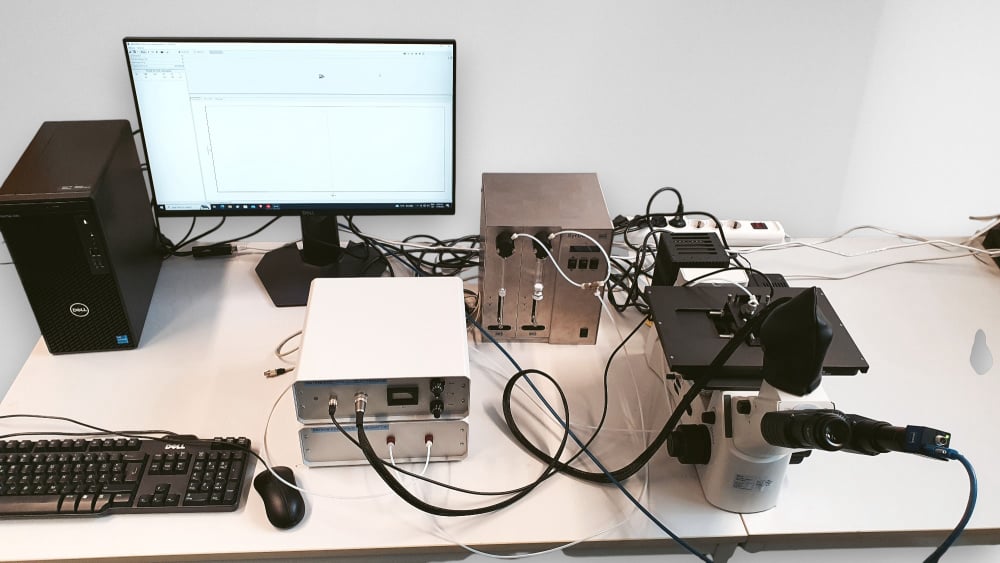
Tensiometry is the most frequently and most efficiently applied methodology to measure the properties of liquid interfaces. The classical ring and plate tensiometry (STA) is still applied as routine method due to the many existing standards. More efficient and informative are modern techniques mainly based on single bubble and drop interfaces. The bubble pressure tensiometry is suitable for very short surface ages, with adsorption times as short as 100 µs reached by our BPA1S or the new BPA2S. The drop and bubble profile analysis tensiometer PAT is the work horse in many laboratories. It is the most versatile instrument and gives access to dynamic surface and interfacial tensions in the time range between few seconds and many hours. The capillary pressure tensiometry DPA, an equivalent to the BPA tensiometry for liquid/gas interfaces, is the complementary technique for studies of short time interfacial tensions at liquid/liquid interfaces. We also provide a drop volume tensiometer DVA. Although its time range of application is rather narrow this method allows studies at both water/air and water/oil interfaces.

Explore Category →
Contact Angle

Contact Angle

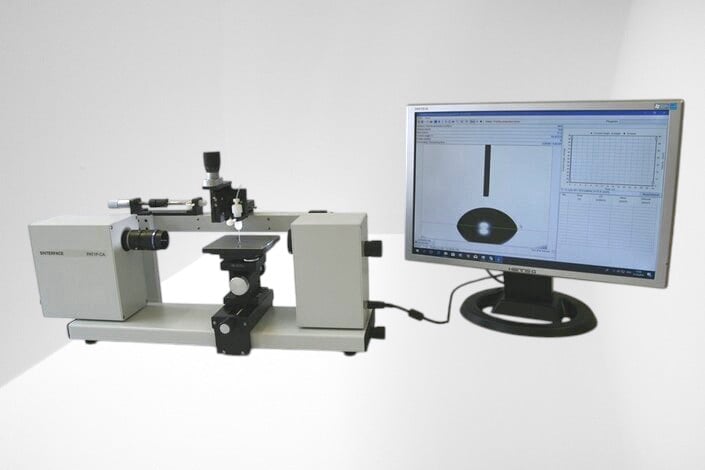
The easiest and frequently applied methodology for the characterization of solid surfaces is the measurement of the contact angle (CA), from which the surface energy of the solid can be derived. The tensiometer STA and most of all the sessile drop profile analysis give access to the CA values. Both methods can provide the receding and advancing contact angle. Together with a video recording, also the dynamics of wetting can be studied. For fast spreaders, the high speed video camera HSC can be applied to the profile analysis.

Explore Category →
Interfacial Rheology

Interfacial Rheology

Both profile and capillary pressure analysis tensiometry are suitable also for measuring the dilational rheology by means of generated area perturbations. While PAT allows for low frequency oscillations up to a maximum of 0.2 Hz, the oscillating drop and bubble capillary pressure analyzer ODBA allows studies of the dilational visco-elasticity to much higher frequencies. For the water/air interface oscillation frequencies of 100 Hz and more are feasible. For water/oil interfaces, due to viscosity and inertia effects, much lower frequencies are feasible. In addition to dilational rheology, our interfacial shear rheometer ISR provides the shear visco-elasticity of interfacial layers. Due to the applied principle of a torsion wire pendulum it is very sensitive an can probe structure formation at interfaces with very low values of the shear visco-elasticities.

Explore Category →
Foam Analysis

Foam Analysis

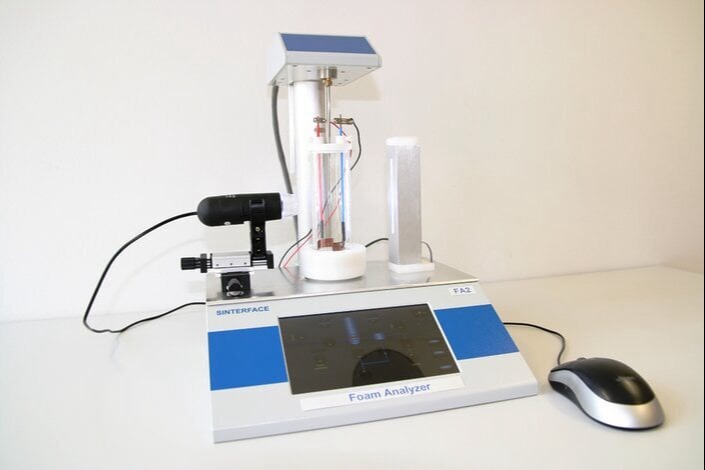
As foams are very frequent systems met in many technological fields their quantitative characterization is very important. In our FA we use a very efficient methodology based on recent scientific achievements. The FA allows to measure the foamability of solutions, as well as the water content (drainage rate) via measurement of the electric conductivity. It also measures the stability as a function of time. Due to an applied partial vacuum we can consider the foam to be homogeneous in the foam column, independent of the foam height. Moreover, by tuning this partial vacuum, the drainage rate and stability of a foam can be influenced. In this way, long lasting foams, stable over many hours or even days, can be quantitatively characterized within reasonable time.

Explore Category →
Thin Film Analysis

Thin Film Analysis

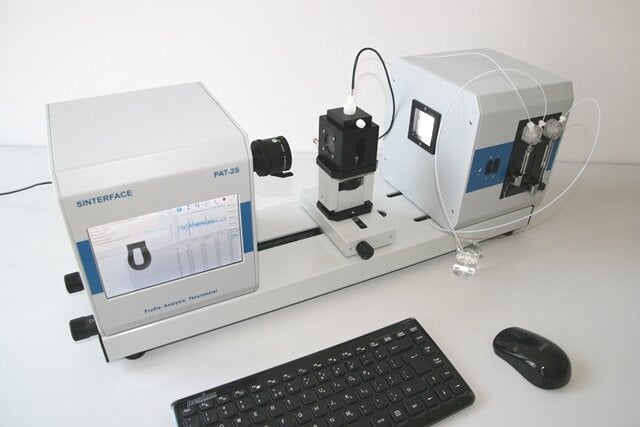
As foams consist of a network of foam bubbles, i.e. many single foam films, it is essential to know also the main properties of these films, i.e. their thickness, drainage behavior, life time. The TFA is an instrument based on interferometric measurements that provides these foam film data. The TFA can also be applied to emulsion films.

Explore Category →
Emulsion Characterisation

Emulsion Characterisation

At present, we do not provide yet an instrument for direct studies of the main emulsion properties. The concept of our DBMM, however, allows mimicking the situation in foams and emulsions, i.e. mimics the contact of two bubbles or two drops in a respective liquid medium. Also asymmetric systems like the interaction of a drop and a bubble can be studied. Combined with our fast video technique HSC it is feasible to study the coalescence process between drops and/or bubbles in real time, i.e. on the scale of microseconds.

Explore Category →

Trusted by Research & Industry

Our Partners & Global Network

Partner Logo
Partner Logo
Partner Logo
Partner Logo
Partner Logo
Partner Logo
Product Highlight

PAT-1M
Profile Analysis Tensiometer

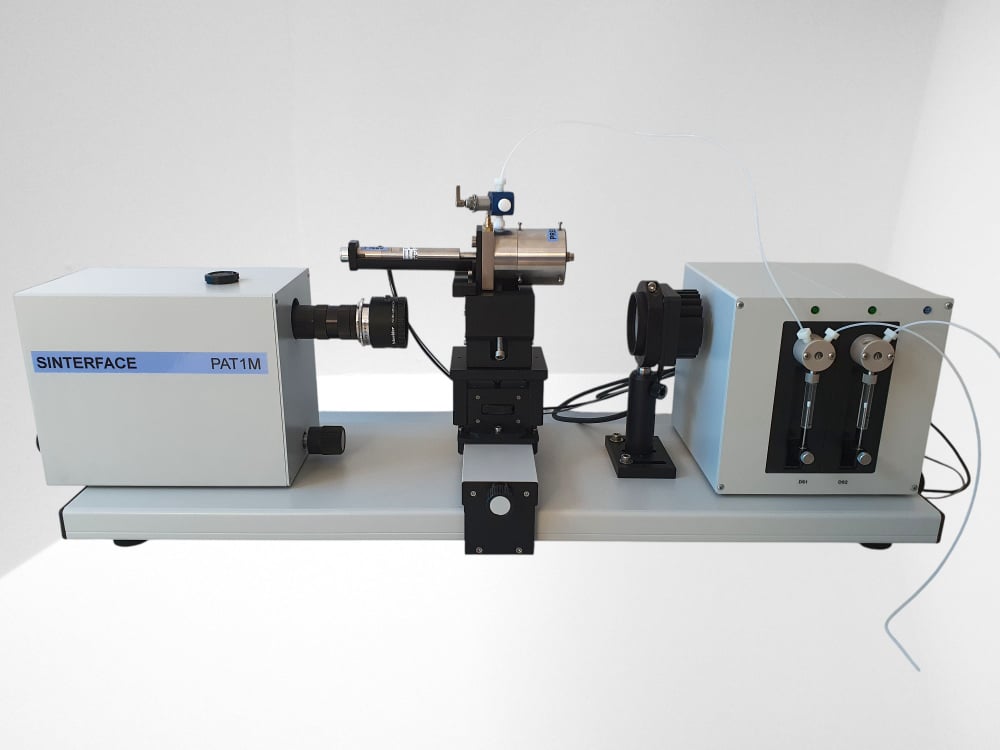
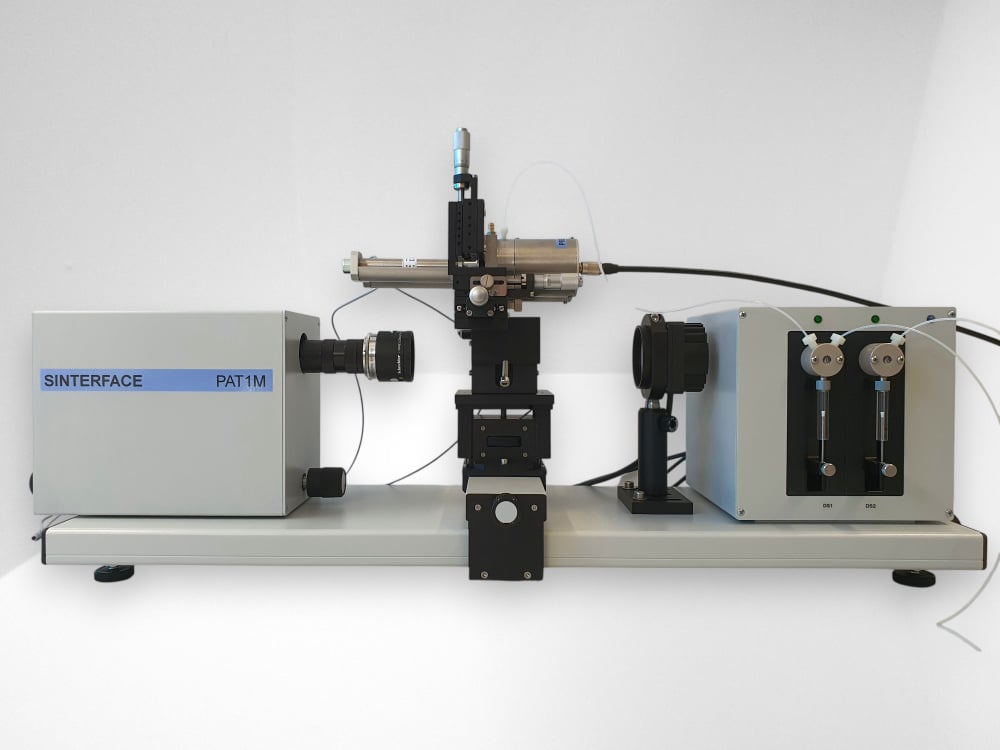
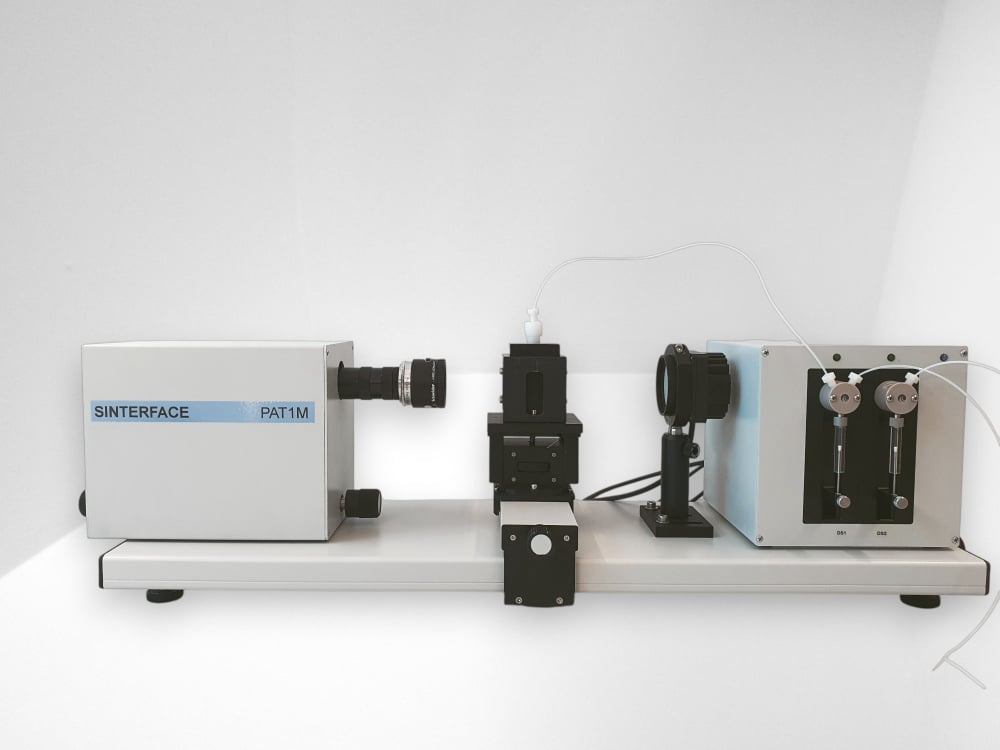
Our PAT1M is based on this methodology and due to its modular architecture, compact design and highly accurate and efficient software it is one of the best instruments of this type worldwide.

  • the only instrument worldwide providing high-speed on-line fitting with up to 32 measured and fitted points per second,
  • Fully automated drop shape analysis
  • Dynamic interfacial rheology module
  • High-temperature and pressure options
  • Modular design for customized setups
View PAT1M Specifications Contact Us
PAT-1M